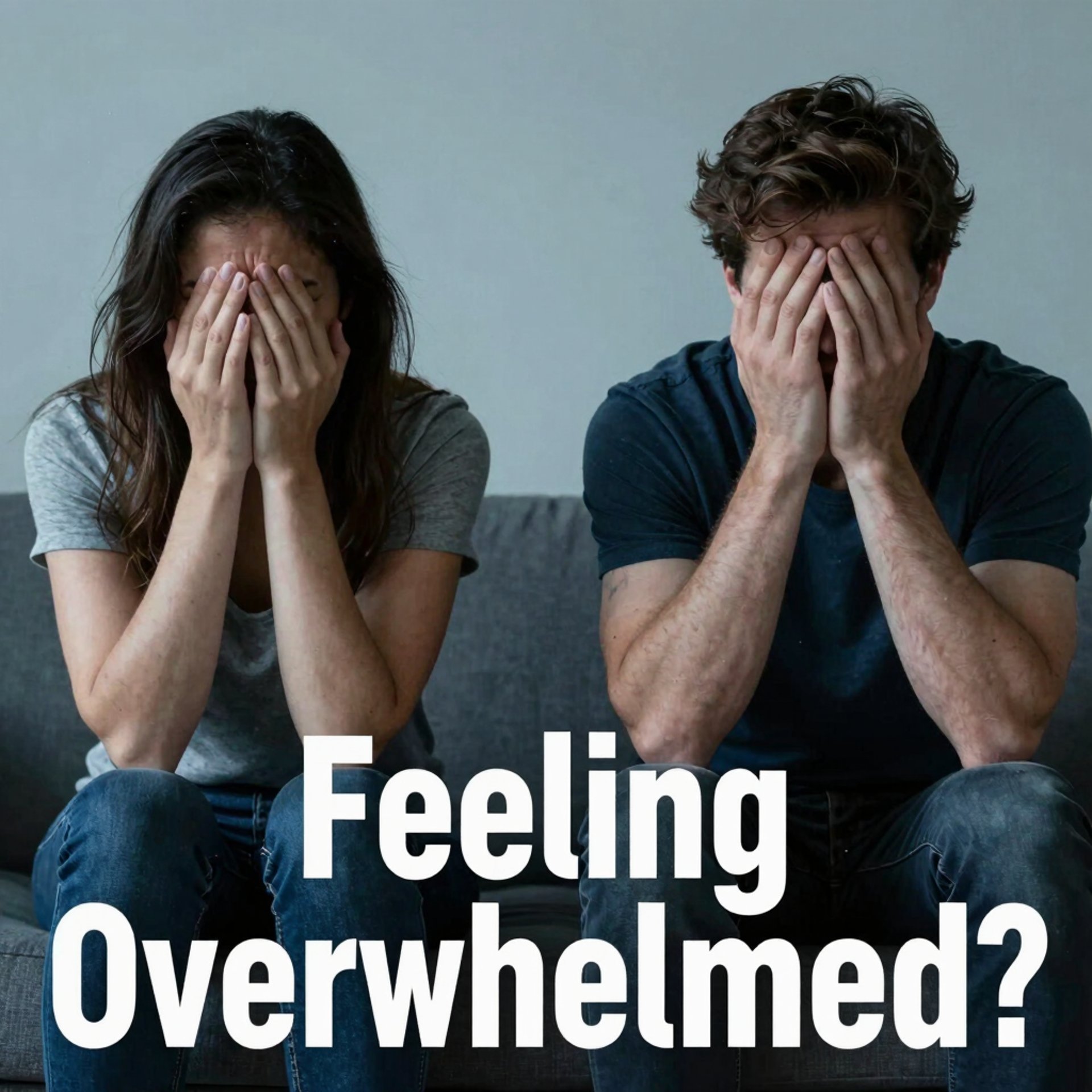
Navigating Overwhelming Emotions: Feeling Overwhelmed Tool for Survivors
7/8/20264 min read


Understanding Overwhelm and Its Effects
There are times when life feels like too much. Not just a little stressful. Not just busy. But too much. Your body feels heavy. Your thoughts race. Your emotions feel bigger than your ability to hold them. You may feel anxious, depressed, numb, trapped, helpless, angry, exhausted, or hopeless. You may not even know exactly what is wrong. You just know something inside you is saying, “I can’t keep doing this.” For survivors of abuse and trauma, overwhelm can feel especially frightening because it can pull us back into old survival responses. Fight, flight, freeze, and fawn are not character flaws. They are ways the nervous system learned to survive when life was unsafe.
But when those responses take over, it can become hard to think clearly, ask for help, make decisions, or even believe that we matter. That is why I created a tool for survivors who are in overwhelm.
A Tool for the Moment When You Need to Pause
The Feeling Overwhelmed? tool was created as a gentle place to stop, breathe, and ask yourself some important questions. The first question is about safety. If you are not safe, or if you feel like you may hurt yourself, this tool encourages you to reach out immediately for crisis support. In the United States, you can call or text 988, or use the 988 Lifeline chat at https://988lifeline.org/chat/.
You do not have to wait until things get worse. You do not have to prove that your pain is “bad enough.” If you are in crisis, support is for you.
Overwhelm is Often a Signal
Overwhelm is not a sign that you are weak or a failure. Many times, it is a signal that something needs attention. Often it is a sign that you are ignoring the parts of you who need you the most. You may be carrying responsibilities that were never yours to carry. You may be doing too much for others while ignoring your own needs. You may be spending time with people who trigger you, dismiss you, drain you, or ask too much from you. You may be falling back into an old role that abuse assigned to you; being the helper, the fixer, the caretaker, the quiet one, the strong one, the one who never needs anything.
But you are not here just to survive for everyone else. You matter too. Your emotions matter. Your needs matter. Your body matters. The younger, hurting, frightened parts of you matter. The part of you that feels alone matters. The part of you that wants someone to notice matters.
And it is not selfish to stop and care for yourself. It is necessary, just like breathing air.
Neglecting Yourself Does Not Make You Loving
Many survivors learned to abandon themselves in order to stay safe, keep the peace, avoid punishment, or take care of everyone else’s emotions. But healing invites us to learn something different.
Love does not require you to disappear. Compassion does not require you to collapse. Serving others does not mean sacrificing your own safety, health, or sanity. Being a Christian does not mean ignoring your limits until you break.
If you keep giving while you are empty, wounded, exhausted, and unsupported, the overwhelm will usually get worse. Your body may grow louder. Your emotions may become harder to manage. Your hope may feel farther away. That does not mean you are failing.
It means you need care.
Listening to the Parts of You That Hurt
Sometimes overwhelm comes from the present moment. Sometimes it comes from younger places inside that still feel scared, unwanted, powerless, or alone.
A trauma response can make a grown adult feel like a helpless child again. Those younger parts may not understand that the abuse is over. They may not know that you have a capable adult self now. They may need comfort, protection, patience, and reassurance. Instead of ignoring those parts, shaming them, or pushing them away, this tool gently helps you ask questions that you may not have thought are effecting you that you have control over. The questions are not meant to judge you but to help you return to yourself and what you need. For now, I encourage you to ask yourself these questions:
What am I feeling?
What do I need?
What is too much right now?
Who or what is making me feel unsafe?
Am I abandoning myself again?
What would be kind, wise, and protective in this moment?
You Are Allowed to Do What You Need to Do
You are allowed to rest.
You are allowed to say no.
You are allowed to step away from people who are triggering, dismissive, demanding, or unsafe.You are allowed to ask for help.You are allowed to stop doing for everyone else long enough to care for the person God entrusted to you — yourself.
You are allowed to take your own pain seriously.
You are allowed to need support.
That does not make you selfish. It makes you human.
You Deserve Safe Support
When you are overwhelmed, you may not believe you deserve help. Trauma can lie to you. Shame can tell you that you are too much, too needy, too broken, or too hard to love.
But those beliefs are not the truth.
You exist.
You matter.
You deserve care.
You deserve safety.
You deserve support.
You deserve people who listen, respect your boundaries, and help you feel less alone.
You deserve not only to know that God is near, but also to have safe and supportive people in your life who can walk with you through hard moments.
This Tool Is Not a Replacement for Crisis Help or Therapy
This tool is meant to help you slow down, reflect, ground yourself, and identify what may be contributing to your overwhelm. It is not a replacement for emergency support, therapy, medical care, or professional counseling. If you are in immediate danger, feel like you may hurt yourself, or cannot stay safe, please call emergency services, go to the nearest emergency room, or contact a crisis line right away.
In the United States, you can call or text 988, or use the 988 Lifeline chat at https://988lifeline.org/chat/.
There Is Hope
Overwhelm can feel like it will last forever, but feelings can rise, peak, and pass. A crisis moment is not the whole story of your life.
You do not have to figure everything out at once.
You can start with breathing. Breathe one slowed down breath. And then blow it out gently.
One question at a time.
One safe choice.
One honest need.
One small step toward help. You can access the tool Feeling Overwhelmed Below.
You are not alone in your pain.
You are not wrong for needing care.
You are not selfish for protecting your peace.
You are worth helping.
You are worth listening to.
You are worth staying for.
And even in the overwhelm, there is still hope.
Access the tool Feeling Overwhelmed Below: